MVHS Physics & Astronomy Club · 37.3894° N, 122.0819° W

Point it at anything.

Seven students at Mountain View High School are building a 10-inch telescope that aims itself. At first light, anyone can request a target — the telescope finds it, photographs it, and sends the image back.

Aperture
254 mm
Focal ratio
f/4.48
Mount
Alt-az GoTo
First light
Aug 2026

Field notes · Mountain View, CA

Built from scratch, by students

The MVHS Physics & Astronomy Club is seven high-school students building a research-grade telescope entirely from scratch — mechanics, optics, electronics, and software — to bring the night sky to the Bay Area through free public star parties.

PLATE I

Hands-on engineering

A 10-inch reflecting telescope built from raw materials — plywood, aluminum, optics, and electronics, designed and assembled by students.

PLATE II

Free star parties

Open community observation nights for families across the Bay Area. No tickets, no fees — just curiosity and clear skies.

PLATE III

Student-led software

6,800+ lines of Python powering autonomous tracking, plate-solving, and auto-alignment — written and tested entirely by our team.

Public observatory · Remote access

A telescope you can use from anywhere

We're building a public-access robotic observatory. Submit a target, get an image of the cosmos — for free, from your phone.

01

You pick a target

A galaxy, a nebula, a planet — anything in our catalog, from any phone or laptop.

02

The telescope slews

The mount finds your object, plate-solves to confirm it's centered, and starts the exposure.

03

The image comes back

Your photograph of the cosmos lands in your inbox. Free, every time.

M45 · The Pleiades — seven sisters, seven students

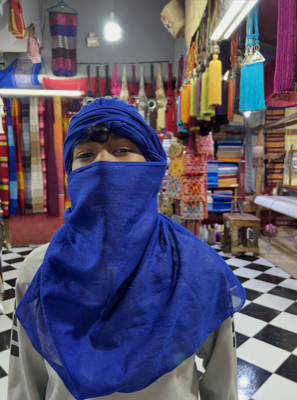
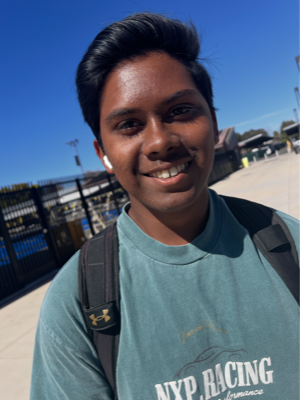
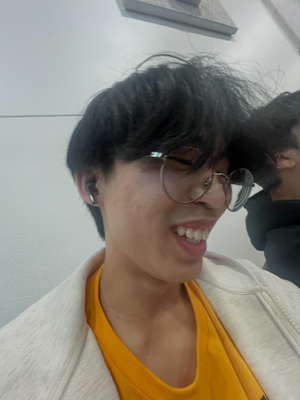
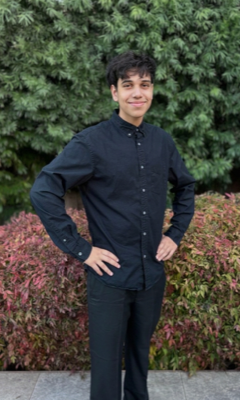
The crew

Mechanical, optical, electronic, and software — every discipline on this build is run by a student.

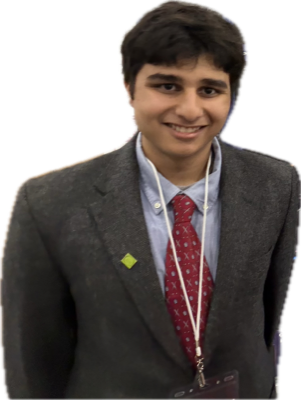
  • Aryan Khanna

    Aryan Khanna

    Club President

  • Eeshan Khandelwal

    Eeshan Khandelwal

    Software & Electronics Lead

  • Neel Chhatrala

    Neel Chhatrala

    Mechanical Lead

  • Vidu Senadheera

    Vidu Senadheera

    Mechanical Member

  • David Cho

    David Cho

    Mechanical Member

  • Tristan Schaefer

    Tristan Schaefer

    Outreach

  • Ishaan Sakariya

    Ishaan Sakariya

    Mechanical & Software Member

The instrument · 254 mm Newtonian on alt-az mount

Anatomy of a light bucket

Every photon that left the Orion Nebula 1,344 years ago ends its trip on a mirror our students aligned by hand.

0 mm
Aperture
0 mm
Focal length
f/0.00
Focal ratio
0+
Lines of code
0
Tests passing

Fig. 1 — Newtonian light path · f/4.48

STARLIGHT · PARALLEL WAVEFRONTPRIMARY · 254 MM PARABOLICSECONDARY70 MM FLAT · 45°PRIME FOCUSATR585CSENSOR AT FOCUS

Fig. 2 — Instrument manifest

Primary mirror
254 mm (10") f/4.48 parabolic — donated by Pacific Holographic, the optical heart of the system.
Star tracking
INDI-compatible GoTo with plate-solving and auto-alignment. The mount knows where it's pointed.
Drives
NEMA 23 altitude/azimuth steppers on TMC2209 silent drivers; ToupTek AAF electronic auto-focuser.
Imaging
ToupTek ATR585C cooled deep-sky camera (Sony IMX585) with a GPM462C guide camera for closed-loop tracking.
Software
Python + TypeScript control stack with a web dashboard and ASCOM/INDI drivers — written by students.
Structure
Truss-tube Dobsonian in Baltic birch. Breaks into two sections, under 50 lbs — fits in a car trunk.

Observing log · 2026 April — August

From plywood to first light

Concept to a working public observatory in under six months.

  1. 2026-04 · APRIn progress

    Design & planning

    Finalize optical design, source the primary mirror, complete CAD models for all mechanical assemblies, and begin procurement of materials.

  2. 2026-05 · MAY

    Fabrication & assembly

    Cut plywood, assemble mirror box and rocker box, machine bearing surfaces, build truss structure, and integrate electronics enclosure.

  3. 2026-06/07 · JUN–JUL

    Electronics & software

    Wire stepper motors and drivers, integrate Raspberry Pi control system, develop tracking software, and run automated test suites.

  4. 2026-08 · AUG

    First light & star parties

    Achieve first light, calibrate optics, perform star tests, and host our inaugural free public star party for the community.

Mirror fund · Direct cash only

Filling the aperture

Every dollar is one more part on the build. The ring below is our 254 mm mirror — we're filling it with light.

$0of $1,484 goal0% funded
$1,0741,484
Estimated budget
2
Cash sponsors
10
In-kind sponsors

The ring counts only direct cash donations. In-kind sponsors provide equipment, fabrication credits, materials, or services that never touch our cash budget — the full roster is on the sponsors page. The estimated budget reflects current pricing on every non-donated part on our parts list.

Sponsorship · Tax-deductible via MVLA school district

Put your name on the telescope

Sponsors are engraved on the instrument itself — every star party it ever points at, your name is there.

$1,074–$1,484

Estimated budget

We build with donated materials wherever possible and keep costs minimal. Your sponsorship — whether $10 or $100 — directly funds the optics, electronics, and materials that make this project possible.

What sponsors receive

  • Your name engraved on our 10-inch Dobsonian telescope
  • Shoutout at every community star party we host
  • Featured on our Instagram (@mvhs_physics_astro_club) and website
  • Invitation to our First Light event in August 2026
  • Tax-deductible donation through our school district